Why I Built Verve
People ask me this a lot now that Verve is live: why build a whole dating app, from scratch, as a solo founder, instead of just complaining about the ones that already exist? Here's the full, honest answer — not the pitch-deck version.
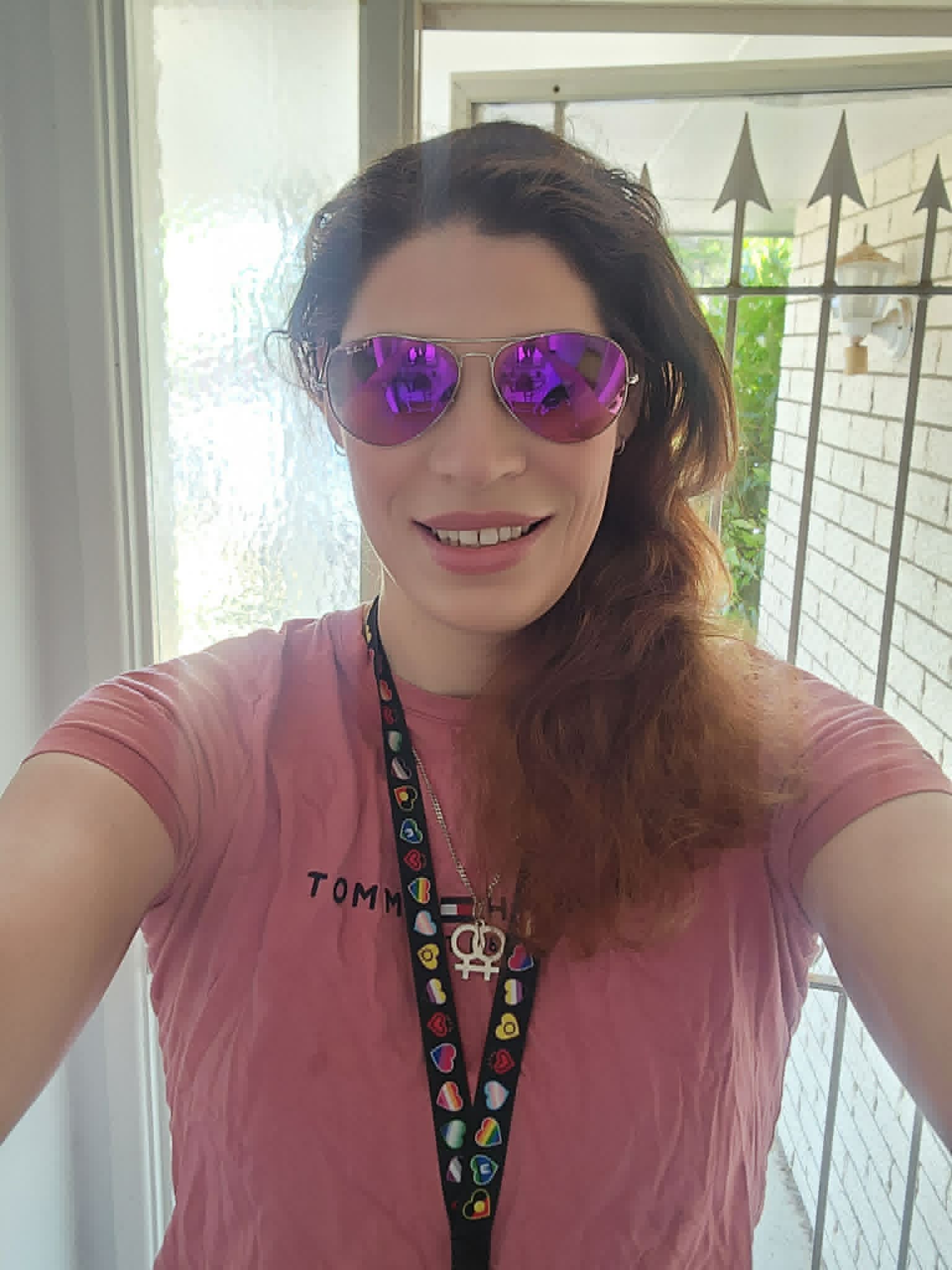
I've told a short version of this story before — on our homepage, in interviews, in the odd comment reply when someone asks why Verve exists. This is the long version. It's personal, because the decision to build this was personal, made over a lot of late nights and twenty years of watching the same problems repeat themselves on every app and website built for women who love women.
If you only read one section, make it the one on verification data — it's the question I get asked most, and it deserves a straight answer, not a privacy-policy paragraph nobody actually reads.
1 Why I Built Verve
I'm an Australian lesbian, and I've been out and part of this community for 29 years. Over that time I've been on pretty much everything women like us have ever used to find each other — HER, Taimi, Zoe, PinkCupid, PinkSofa, Skout, Bumble and Plenty of Fish, all the way back to MSN Chat and IRC chatrooms, plus every general platform that ended up doubling as a place to meet women anyway, from Myspace and Facebook to Instagram.
To be clear, I wasn't on all of them constantly for two decades straight. I only used them as dating platforms when I was actually single. When I had a girlfriend/partner, I'd still sometimes use a few of them looking for friends in the community rather than dates — and even that, just wanting platonic friendship with zero dating intent, turned out to be harder than it had any right to be.
Somewhere along the way, I stopped being surprised when a match disappeared mid-conversation, or turned out to be years and a continent removed from her photos, or wasn't actually who — or what — she said she was. I'd just sigh, block, and move on, the way you learn to do.
What made it different for me is that I wasn't just a frustrated user. I'm also a coder, and I've worked in the IT industry for more than 20 years. At some point, sitting in yet another dead conversation with someone who turned out not to be real, the two halves of my life started to collide: I had a decent idea of what these apps were getting wrong under the hood. And I knew, personally, exactly how much it cost the people using them.
Then, in 2025, a few different women in my life — friends, women I'd dated, women I'd met on and off through some of the apps above — started half-jokingly asking me the same thing, more than once: "You know how to code, why don't you just build one that actually works?" I laughed it off the first couple of times. But the question kept coming back, so I finally sat down and took it seriously: if I really were going to build a dating and community app for women like us, what would I actually do differently, instead of just repeating everyone else's mistakes?
So, starting in 2025, I sat down and started planning it properly — what verification had to look like, what security couldn't be compromised on, what the UI actually needed to feel like. Then I built it: the app I'd been wishing existed the entire time. Not a pitch to investors. Not a growth-hacked side project. Verve exists because a few women asked me a question I couldn't stop thinking about, and because I was one of the few people around who could actually go build the answer instead of just talking about it.
2 What Frustrated Me About Existing Dating Apps
Twenty years gives you a lot of time to notice patterns. By the end, my frustrations weren't really with any one app — they were with the category as a whole.
- Fake profiles were never the exception. On every platform I used, over enough time, catfish and bots stopped being a rare bad experience and started being a background tax on using the app at all.
- "Verified" badges that verify nothing. The most common version I encountered was a selfie held in a specific pose — proof someone can operate a phone, not proof of who they actually are.
- Apps built "for women" that slowly stopped being for women. I watched more than one platform I liked quietly drift open as it grew, until the thing that made it feel safe in the first place was gone. I go into this one carefully in why lesbian dating apps keep failing — it's a nuanced topic and deserves its own space.
- Paying a lot for very little. Some of the pricing I've seen over the years for genuinely basic features is, frankly, exploitative — and it adds up fast for people who are just trying to meet someone.
- Built to keep you swiping, not to help you leave. Paywalled likes, throttled matches, a free tier just crippled enough to nudge you toward upgrading — mechanics designed around engagement metrics, not around actually finding someone.
- Reports that vanish. I lost count of how many times I, or a friend, reported an obviously fake or abusive account and simply never heard anything back.
None of this made me angry in a dramatic way. It wore me down in a much quieter, more familiar way — the way it wears down anyone who keeps showing up to something that keeps letting them down.
3 Why Verification Matters
This is the part of my background that actually matters here: two decades in the IT industry teaches you to stop asking "does this look safe?" and start asking "what would someone trying to abuse this actually do, and does this stop them?" Almost nothing in mainstream dating apps holds up to that question.
A static selfie, a photo pose, an optional badge — none of it proves a real, live, present person is behind a profile at the moment it matters. It proves someone once held a phone in front of their face. That's a UX flow, not a security control.
A liveness check is a different kind of thing entirely. It confirms — at the moment of sign-up — that there's a real, live human behind the profile, not a recycled photo set, not a static image, not an automated account. It's a small piece of friction that does a genuinely disproportionate amount of work, because it changes the economics for anyone trying to run a fake account: suddenly, faking it requires an actual live person willing to sit in front of a camera, not just a folder of stolen photos.
That's why verification sits at the very front of Verve, before anyone can appear to another member — not as a badge you can choose to display, but as the door everyone has to walk through first.
💡 A liveness check usually just means a short, simple action — a blink, a head turn — captured live, not uploaded. It takes about as long as picking a good profile photo.
4 What Happens to Verification Data
This is the question I get asked most, and it's the one I most want to answer plainly, because I know exactly why people are wary of it.
Verve never asks for a government ID or any official document — not at sign-up, not ever. We ask for a selfie and a short liveness check, purely to confirm you're a real, present person. That's the entire ask.
Here's what happens to it: it's used once, to confirm you're real, and then it is permanently deleted. Not archived. Not quietly retained "for safety purposes." Not accessible later by our support team, by me, or by anyone else. Once your account is verified, what remains is simply the fact that you're verified — not the image that proved it.
I built it this way on purpose, and it comes directly from years spent working in IT: the safest data is data that doesn't exist to be stolen, leaked, or misused in the first place. A verification system that quietly keeps a growing archive of selfies is a liability sitting in wait — a single breach away from becoming exactly the kind of harm it was supposed to prevent. I wasn't willing to build that, even though it would have been technically simpler to just store everything indefinitely.
✅ Used once. Then gone. No ID, no documents, nothing kept — not even by us.
5 Privacy Is Part of Queer Safety
There's a version of "privacy" that's just a settings toggle, and there's a version that's actually about safety. For a lot of mainstream dating apps, it's mostly the first kind. For an app built for lesbian and sapphic women, it has to be the second — because for plenty of us, depending on family, workplace, community, or where we live, being outed or exposed to the wrong person isn't just awkward. It can be genuinely dangerous.
A few things I hold to here, as design decisions rather than just lines in a policy document nobody reads:
- "Your private conversations stay private." A conversation between you and someone else is exactly that — not a dataset, not something mined for engagement analytics, not something a stranger can casually stumble into.
- "You decide what you share." How out you are, what you disclose, and to whom, is entirely your call. Nothing about your identity gets pushed further than you chose to put it.
- "Verification information is not kept after approval." The same principle from the last section applies everywhere else in the app: the less we hold onto, the less there is to ever leak, get misused, or be handed over to someone who shouldn't have it.
- "A screenshot should not become somebody else's content." Something said to you privately doesn't become public property because someone decided to capture it. Sharing another member's private messages, photos, or identity outside Verve without consent — including outing someone — is a real violation of our community rules, not a grey area, and it's treated accordingly.
✅ "Privacy is part of queer safety." Not a nice-to-have feature — for a lot of us, it's the reason an app like this is usable at all.
6 Features I Refused to Compromise On
A few decisions I made early on, and never revisited, no matter how much easier the alternative would have been:
- Verification isn't optional. There's no "skip for now," no unverified profiles quietly visible in discovery. If you haven't passed the check, no one else can see you. No exceptions for growth targets.
- Data deletion isn't a policy — it's the default behaviour. It doesn't wait for a user to request it. It happens automatically, the moment it's no longer needed.
- Moderation reports go to a real process, on a real clock. Not a queue that gets cleared "eventually." I'd rather move slower on other features than ship a report button that leads nowhere.
- Pricing stays simple and honest. One clear plan, stated plainly, with no paywalled likes, no manufactured urgency, and no features deliberately crippled just to push an upgrade.
- Built specifically for lesbian and sapphic women — not a general LGBTQI+ app with different branding, not a men's app repainted pink. Every decision gets made with this specific community in mind, because I am this specific community.
7 What I Learned From Two Decades of Online Dating
Twenty-plus years of online dating — across every app and chatroom I mentioned earlier, and probably a few I've since forgotten — taught me more than any product meeting ever could.
I remember what the internet felt like in the earlier years of all this — smaller communities, where trust had to be earned and reputations actually meant something, because everyone was, in some sense, accountable to everyone else. That's mostly gone now, replaced by scale: bigger user bases, bigger ad budgets, and much less accountability for any single bad actor, because there are always more accounts behind them.
I also learned how exhausting it is to be the one doing all the safety work yourself — cross-checking a profile against other social platforms before agreeing to meet, screenshotting a conversation just in case, learning to spot the specific phrasing a catfish script uses because you've now seen it on three separate apps. None of that should be a dating skill anyone has to develop. It's a workaround for platforms that never built real safety in.
The biggest lesson, though, was more uncomfortable: I stopped believing this was just how online dating had to be. I'd meet other women with near-identical stories, compare notes, laugh about it in the way you laugh about something that's actually not funny at all — and eventually I realised I was in a fairly unusual position to actually do something about it, rather than just trade stories about it. That realisation is the entire reason Verve exists.
8 Building Verve as an Australian Lesbian Founder
Verve is designed, built, and run out of Australia, and I don't think that's incidental to what it is. There's a certain directness I've tried to build into everything — the copy, the pricing, the way we talk about safety — that I'd put down to a fairly Australian instinct for cutting through the sales pitch and just saying the true thing plainly.
Being a solo founder means Verve moves fast and answers directly — there's no committee sitting between a member's concern and someone who can actually act on it. It also means everything, including the legal and privacy groundwork, had to be done properly from day one rather than patched in later. My years in the IT industry made that non-negotiable: Verve was built with Australia's Privacy Act, GDPR, and the eSafety Commissioner's Online Safety Act in mind from the start, not bolted on after a scare.
And being a lesbian building this, specifically, means the whole thing is designed from the inside rather than guessed at from outside. Every decision — what verification looks like, what the community guidelines say, what happens when someone reports a bad match — was made by someone who has actually needed this app to exist, not a product team optimising a market segment.
Outside of Verve, I make a bit of music under the name Girlkiss, mostly as a way of staying sane while building all this. But Verve is the main project, and it's the one I built for exactly the community I'm part of — because after 29 years in it, and 20+ working in IT and on dating apps and sites, I'd earned the right to be a little stubborn about getting it right.
— Alisha, Founder of Verve Dating
Ready to date somewhere built with you in mind?
Every profile verified before it's visible. Verification data deleted the moment it's done its job. Built specifically for lesbian and sapphic women, by one of us — not a product team guessing from outside.